
Nigeria has opened a billion-dollar, Chinese-built deep seaport in Lagos, which is expected to ease congestion at the country’s ports and help it become an African hub for handling cargoes in transit for other destinations as well as transshipment.
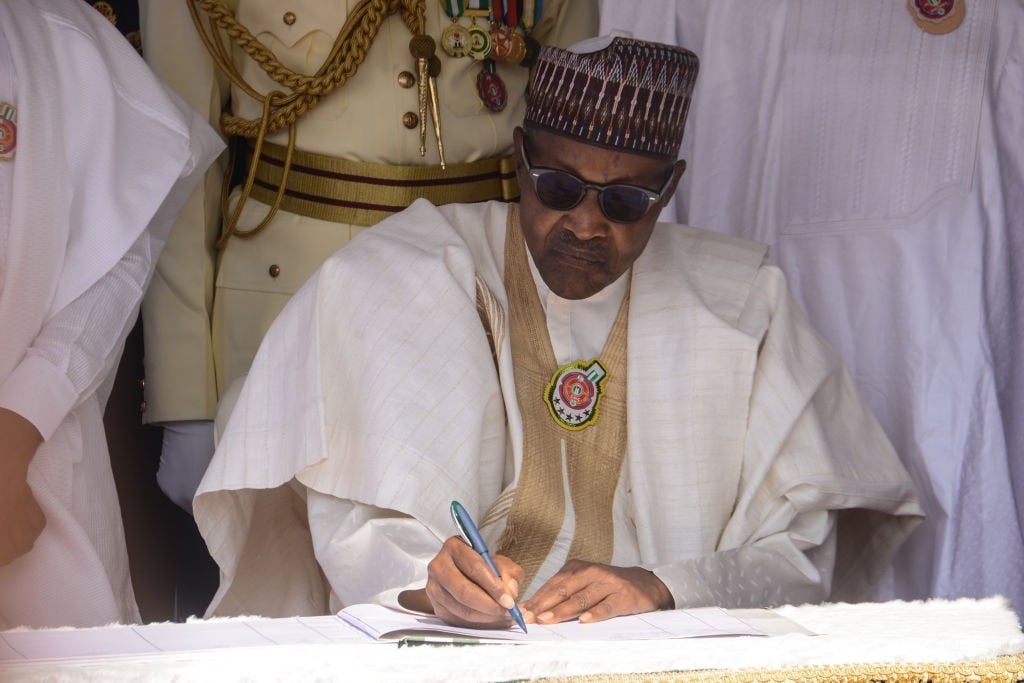
President Muhammadu Buhari, who opened the port on Monday January 23, has made infrastructure development a core tenet of his government’s economic policy in the hopes that it will help his ruling party gain support ahead of next month’s election.
Many of Nigeria’s seaports, which were left behind from the British colonial government, are inoperable or only partially utilized. The majority of trade currently passes via two in Lagos and two others in and around Port Harcourt, the nation’s oil center, which causes constant traffic and logistical problems for imports and exports.
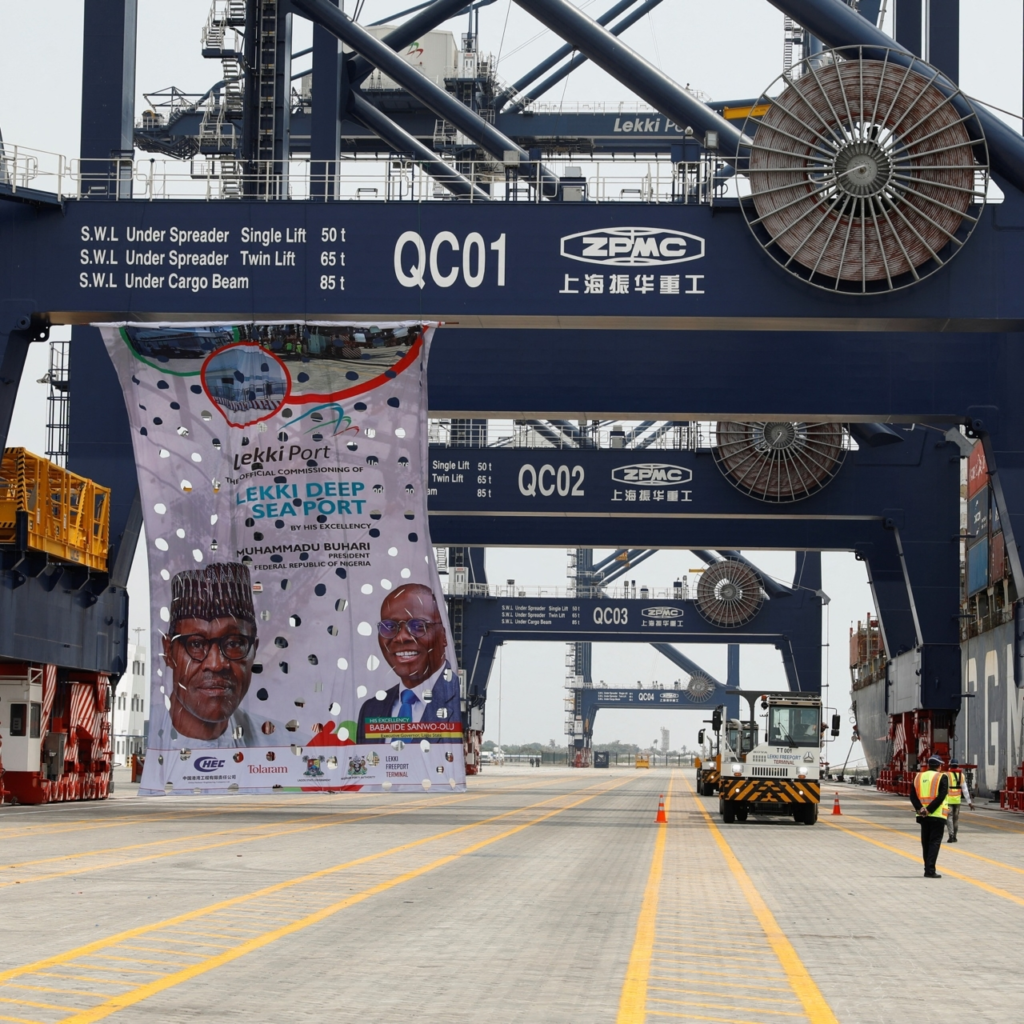
According to Governor Babajide Sanwo-Olu, “the size of vessels that will be coming here could be up to four times the size of vessels that currently berth at Tin Can and Apapa Ports.”
China is one of Nigeria’s top bilateral lenders and has funded power plants, highways, and rail lines.
The China Harbour Engineering Company and Singapore’s Tolaram Group jointly hold 75% of the new Lekki Deep Sea Port, with the Lagos state government and the Nigerian Ports Authority owning the other 25%.
The new port, which cost an estimated $1.5 billion to build, is one of the biggest in West Africa, according to authorities.


More Stories
“Make Ghana’s Free Education Truly Accessible – Enforce the Law and Open the Doors.”
ShattaFest 2025: The Night Shatta Wale Proved He Owns the Streets
2,470 Ghanaians in U.S. ICE Custody Awaiting Deportation